Antibiotics · SSTI · 11 slides
Faropenem in skin and soft tissue infections.
An invited talk at PUNJ SURG 2026, Ludhiana: where an oral penem fits after parenteral therapy for skin and soft tissue infections.
About the downloads
PowerPoint without speaker notes. SHA-256 checksums verify the downloaded files.
Contents · 3 parts
Why faropenem
Faropenem in skin and soft tissue infections
Faropenem in Skin and Soft Tissue Infections (SSTI)
Dr Prateek Gupta
Assistant Professor, Department of General Surgery Dayanand Medical College and Hospital, Ludhiana
prateekguptasurgery.com
01-11-2026
The gap it fills
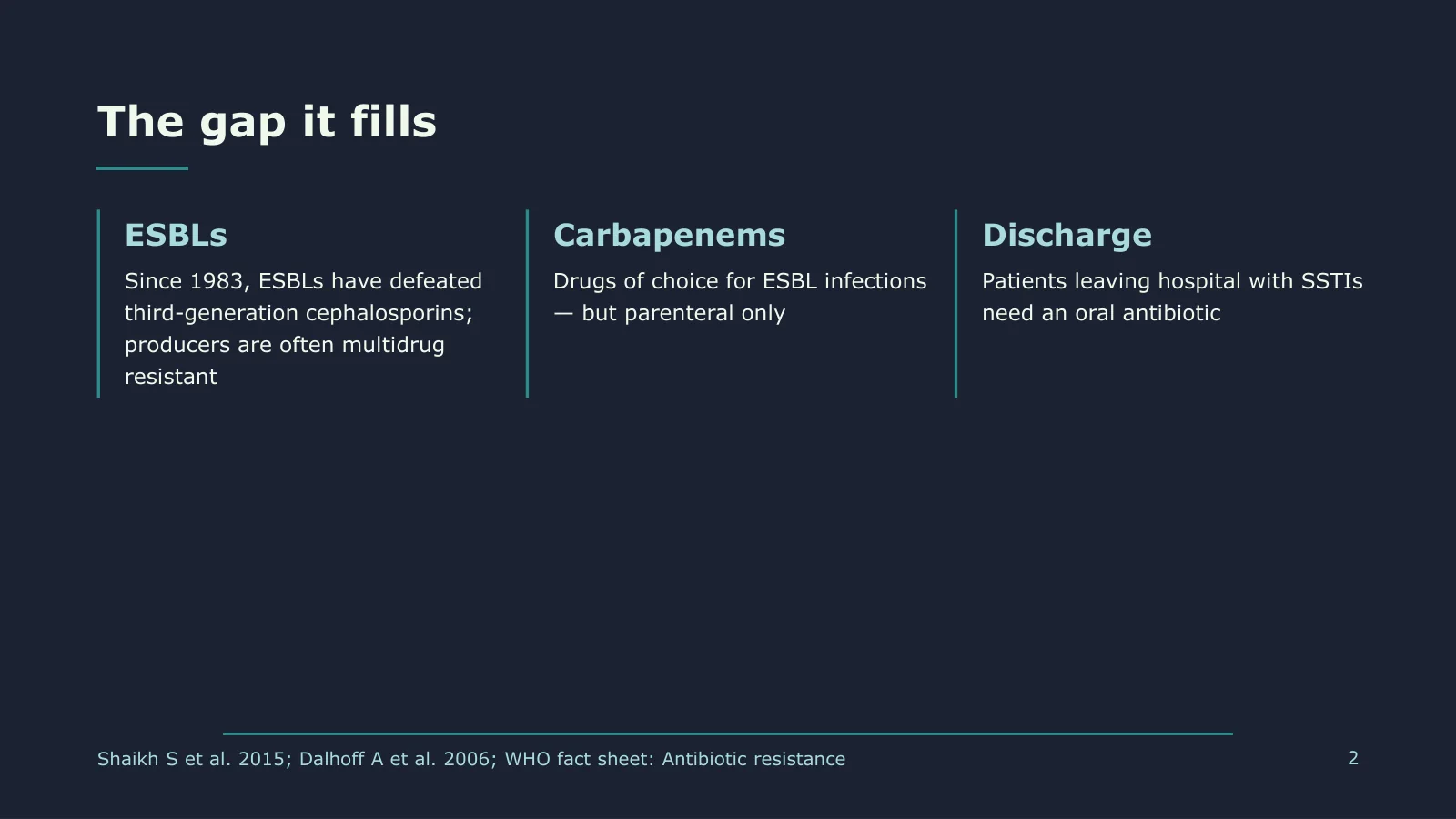
ESBLs
Since 1983, ESBLs have defeated third-generation cephalosporins; producers are often multidrug resistant
Carbapenems
Drugs of choice for ESBL infections — but parenteral only
Discharge
Patients leaving hospital with SSTIs need an oral antibiotic
Shaikh S et al. 2015; Dalhoff A et al. 2006; WHO fact sheet: Antibiotic resistance
2
Faropenem: a penem antibiotic
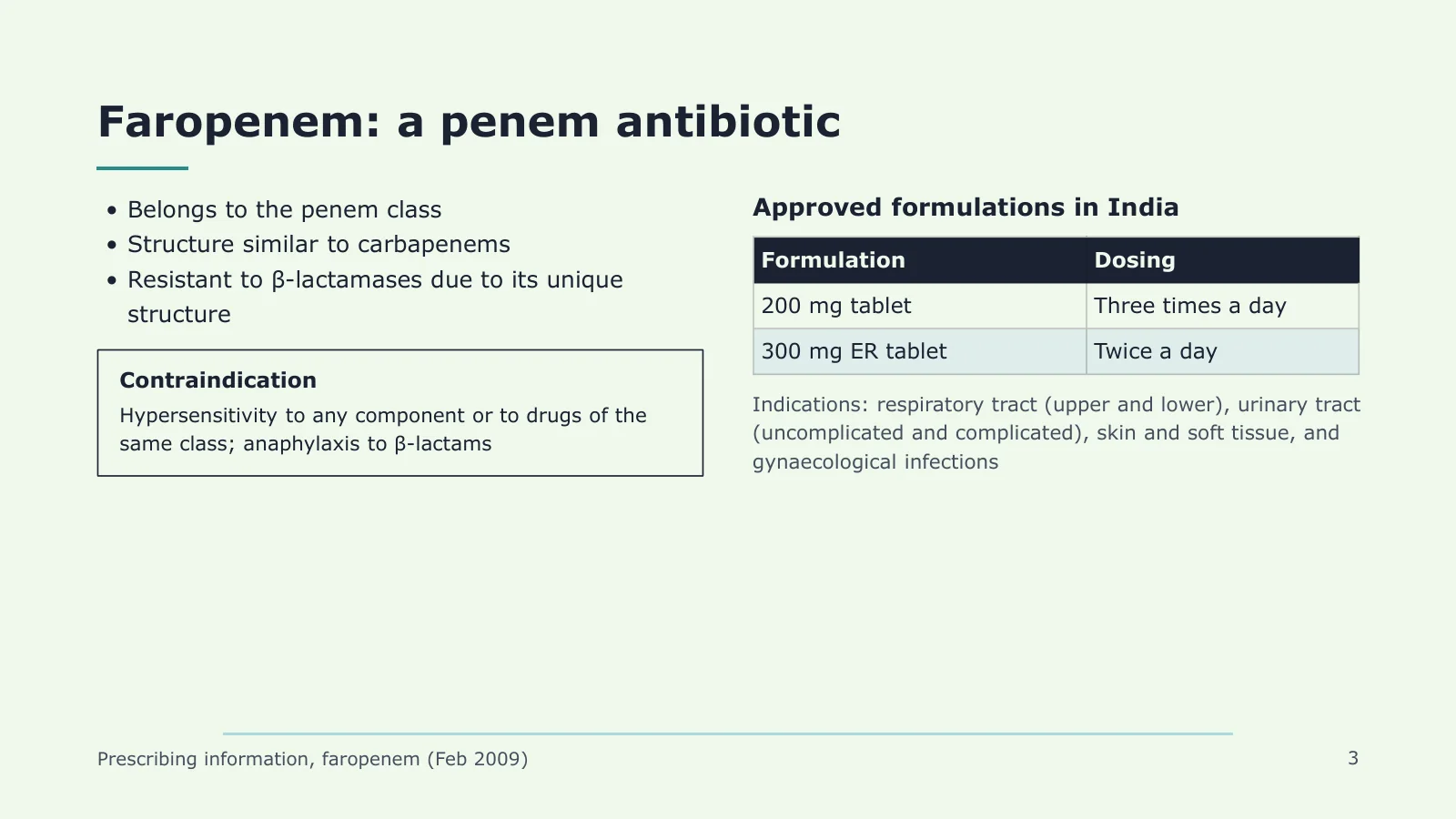
Belongs to the penem class Structure similar to carbapenems Resistant to β-lactamases due to its unique structure
Contraindication
Hypersensitivity to any component or to drugs of the same class; anaphylaxis to β-lactams
Approved formulations in India
Indications: respiratory tract (upper and lower), urinary tract (uncomplicated and complicated), skin and soft tissue, and gynaecological infections
Prescribing information, faropenem (Feb 2009)
3
| Formulation | Dosing |
| 200 mg tablet | Three times a day |
| 300 mg ER tablet | Twice a day |
Spectrum and activity
Broad spectrum, including anaerobes
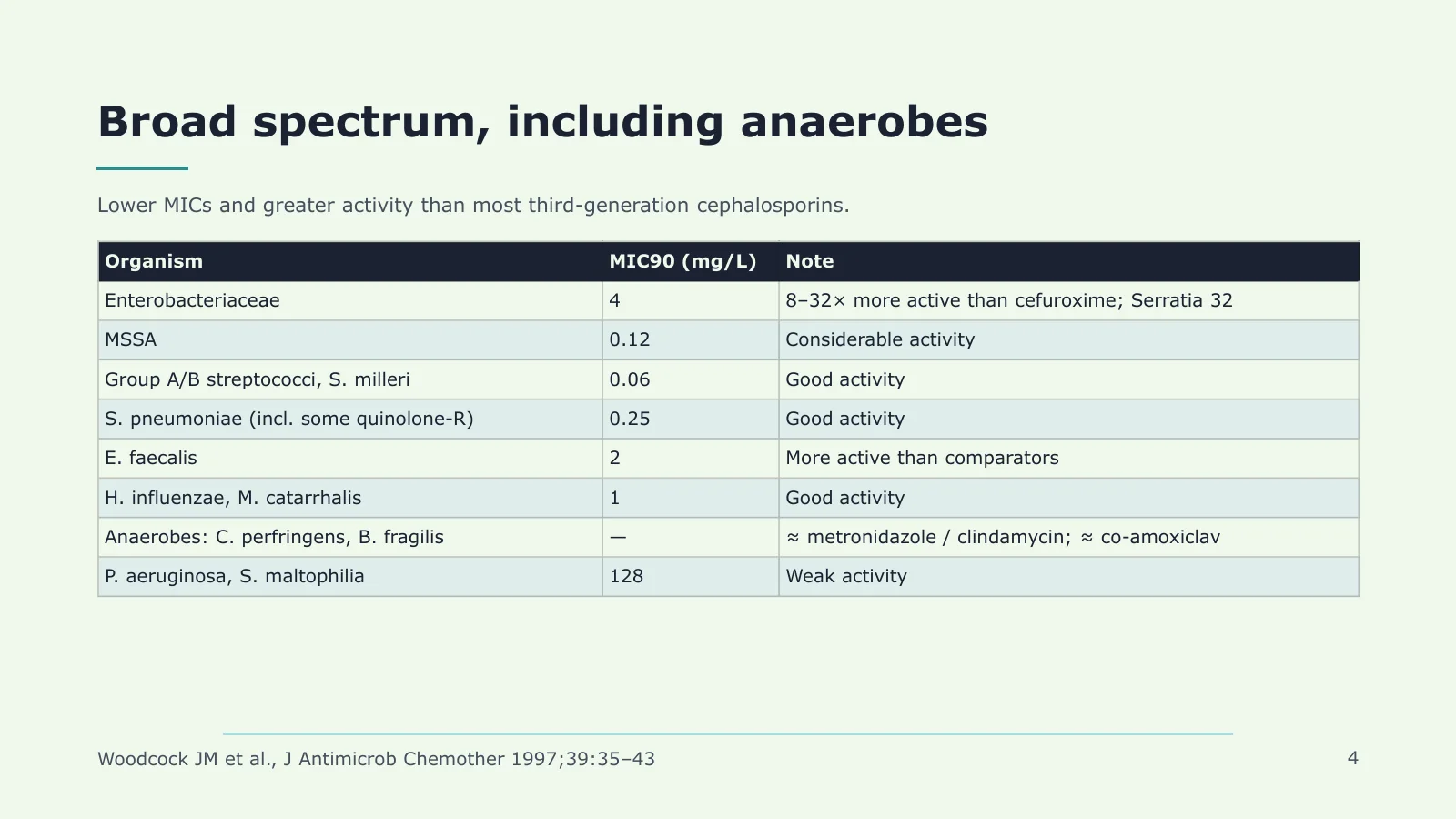
Lower MICs and greater activity than most third-generation cephalosporins.
Woodcock JM et al., J Antimicrob Chemother 1997;39:35–43
4
| Organism | MIC90 (mg/L) | Note |
| Enterobacteriaceae | 4 | 8–32× more active than cefuroxime; Serratia 32 |
| MSSA | 0.12 | Considerable activity |
| Group A/B streptococci, S. milleri | 0.06 | Good activity |
| S. pneumoniae (incl. some quinolone-R) | 0.25 | Good activity |
| E. faecalis | 2 | More active than comparators |
| H. influenzae, M. catarrhalis | 1 | Good activity |
| Anaerobes: C. perfringens, B. fragilis | — | ≈ metronidazole / clindamycin; ≈ co-amoxiclav |
| P. aeruginosa, S. maltophilia | 128 | Weak activity |
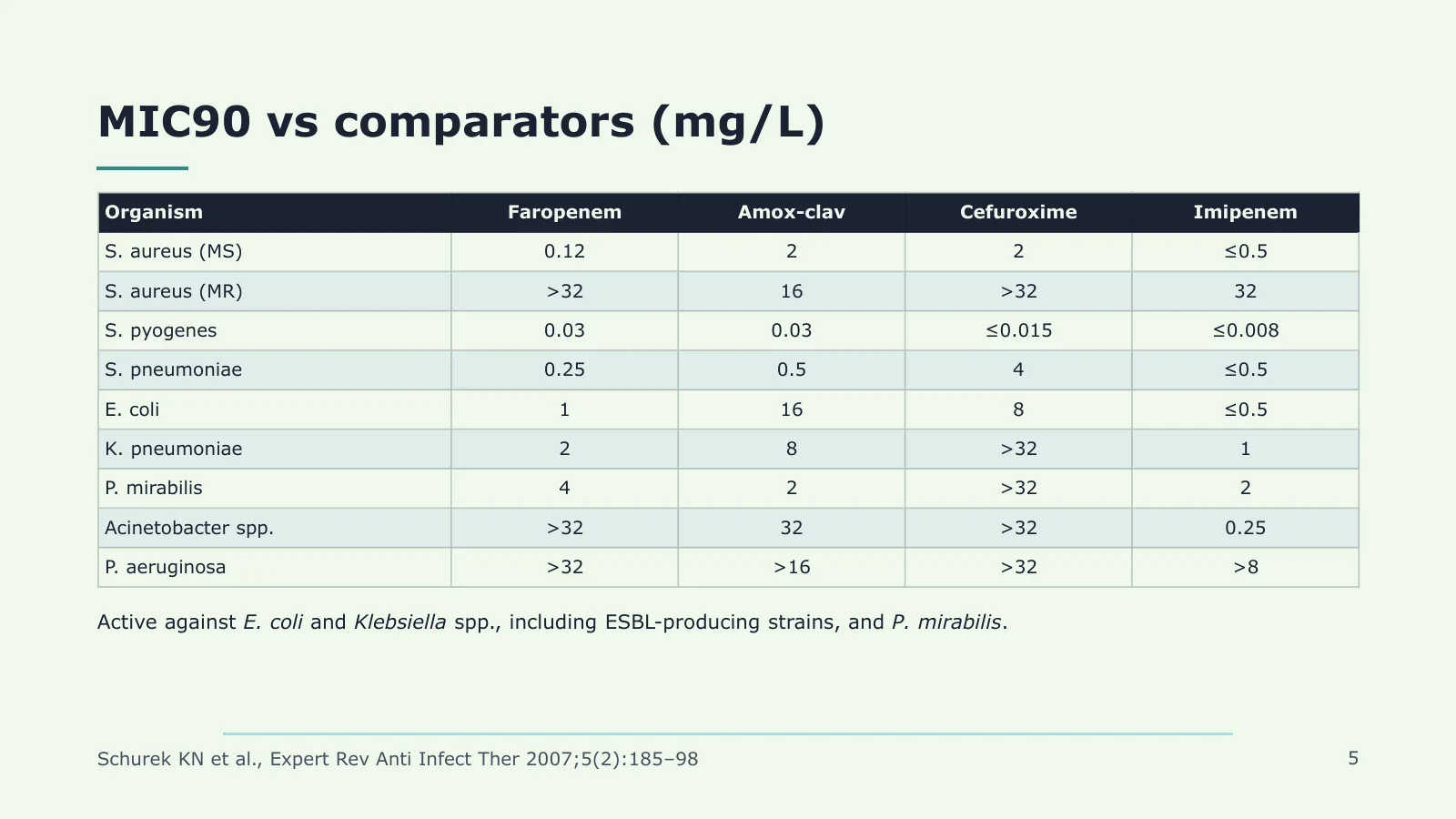
MIC90 vs comparators (mg/L)
Active against E. coli and Klebsiella spp., including ESBL-producing strains, and P. mirabilis.
Schurek KN et al., Expert Rev Anti Infect Ther 2007;5(2):185–98
5
| Organism | Faropenem | Amox-clav | Cefuroxime | Imipenem |
| S. aureus (MS) | 0.12 | 2 | 2 | ≤0.5 |
| S. aureus (MR) | >32 | 16 | >32 | 32 |
| S. pyogenes | 0.03 | 0.03 | ≤0.015 | ≤0.008 |
| S. pneumoniae | 0.25 | 0.5 | 4 | ≤0.5 |
| E. coli | 1 | 16 | 8 | ≤0.5 |
| K. pneumoniae | 2 | 8 | >32 | 1 |
| P. mirabilis | 4 | 2 | >32 | 2 |
| Acinetobacter spp. | >32 | 32 | >32 | 0.25 |
| P. aeruginosa | >32 | >16 | >32 | >8 |
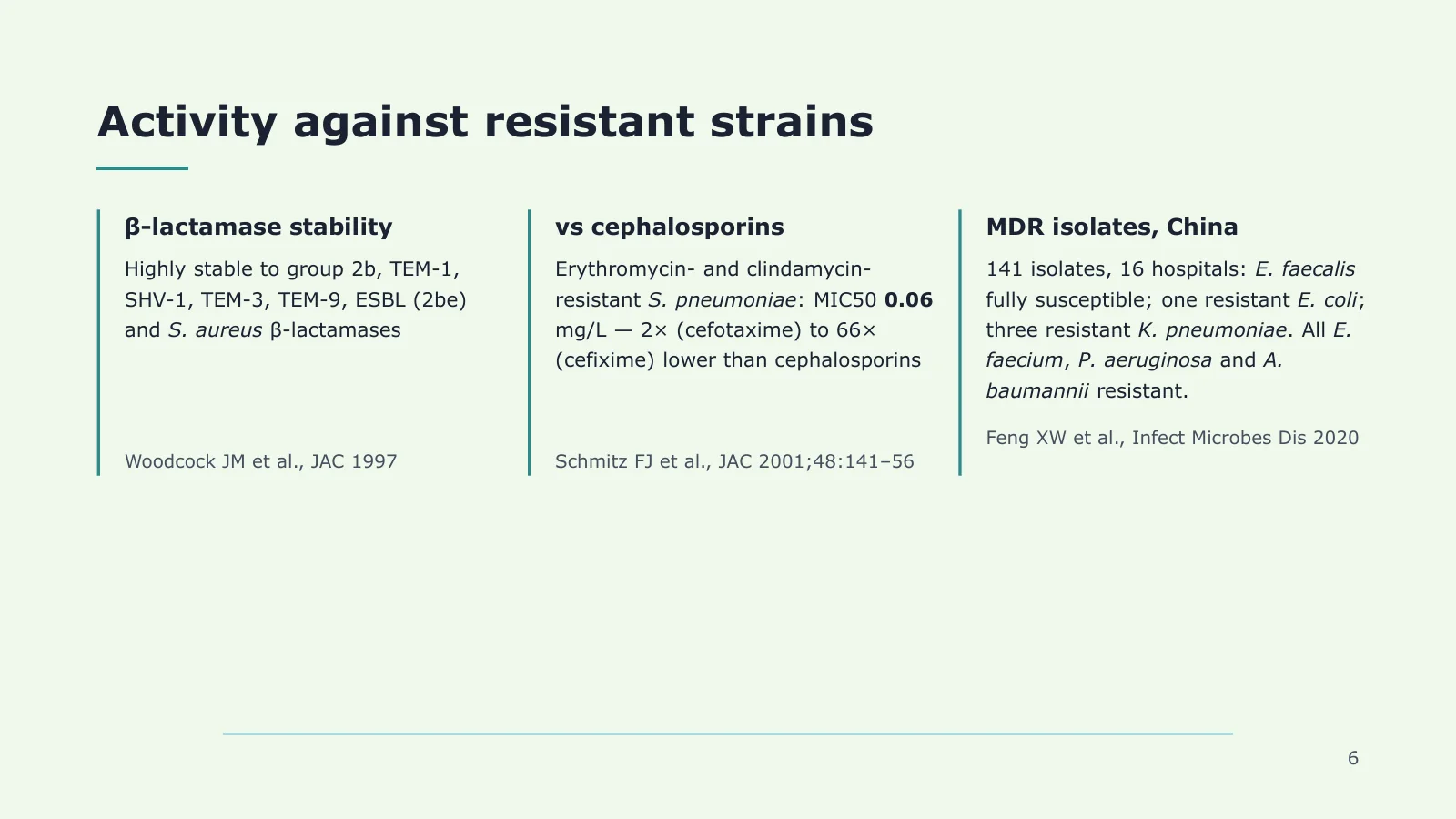
Activity against resistant strains
β-lactamase stability
Highly stable to group 2b, TEM-1, SHV-1, TEM-3, TEM-9, ESBL (2be) and S. aureus β-lactamases
Woodcock JM et al., JAC 1997
vs cephalosporins
Erythromycin- and clindamycin-resistant S. pneumoniae: MIC50 0.06 mg/L — 2× (cefotaxime) to 66× (cefixime) lower than cephalosporins
Schmitz FJ et al., JAC 2001;48:141–56
MDR isolates, China
141 isolates, 16 hospitals: E. faecalis fully susceptible; one resistant E. coli; three resistant K. pneumoniae. All E. faecium, P. aeruginosa and A. baumannii resistant.
Feng XW et al., Infect Microbes Dis 2020
6
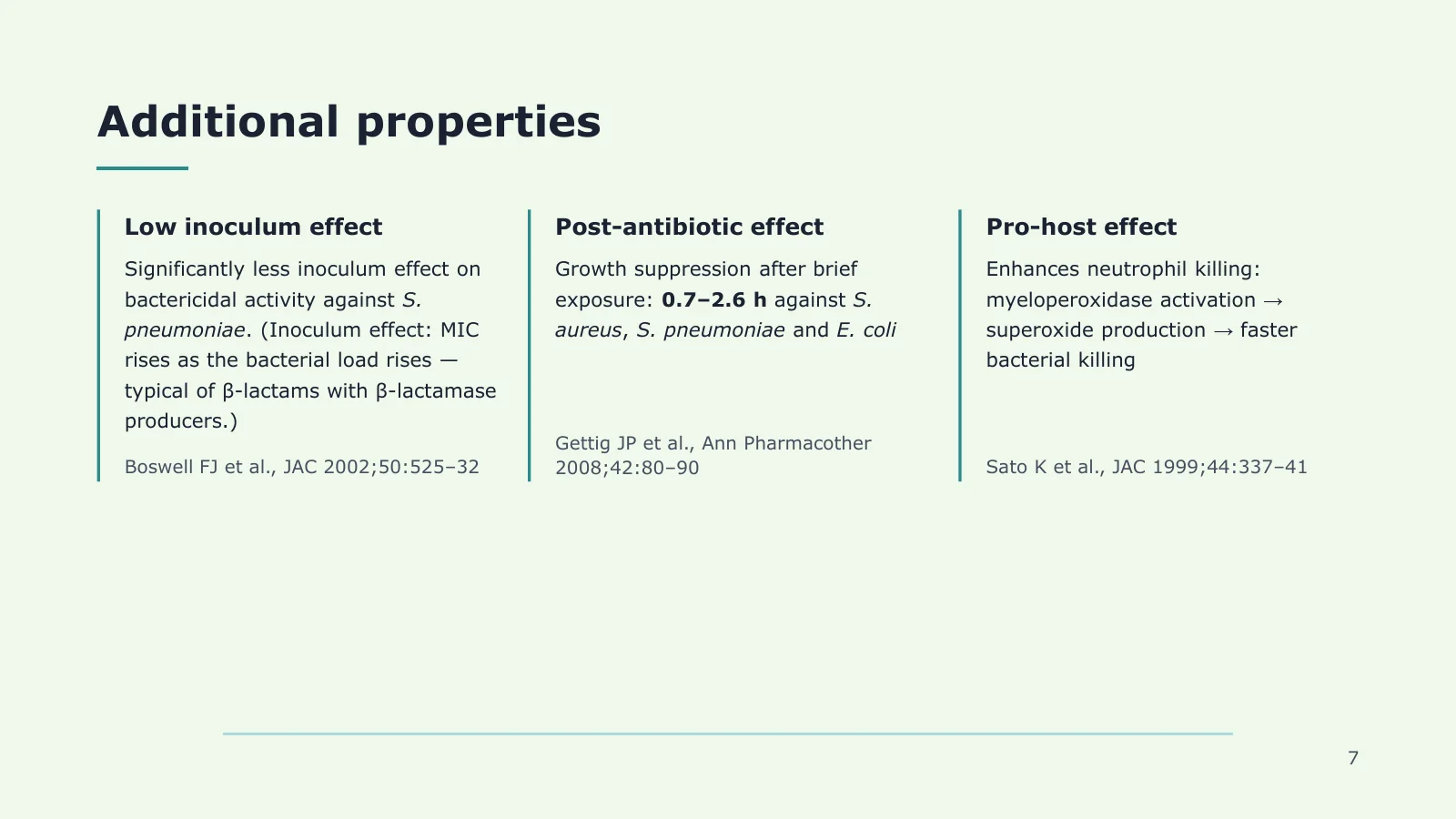
Additional properties
Low inoculum effect
Significantly less inoculum effect on bactericidal activity against S. pneumoniae. (Inoculum effect: MIC rises as the bacterial load rises — typical of β-lactams with β-lactamase producers.)
Boswell FJ et al., JAC 2002;50:525–32
Post-antibiotic effect
Growth suppression after brief exposure: 0.7–2.6 h against S. aureus, S. pneumoniae and E. coli
Gettig JP et al., Ann Pharmacother 2008;42:80–90
Pro-host effect
Enhances neutrophil killing: myeloperoxidase activation → superoxide production → faster bacterial killing
Sato K et al., JAC 1999;44:337–41
7
Clinical use
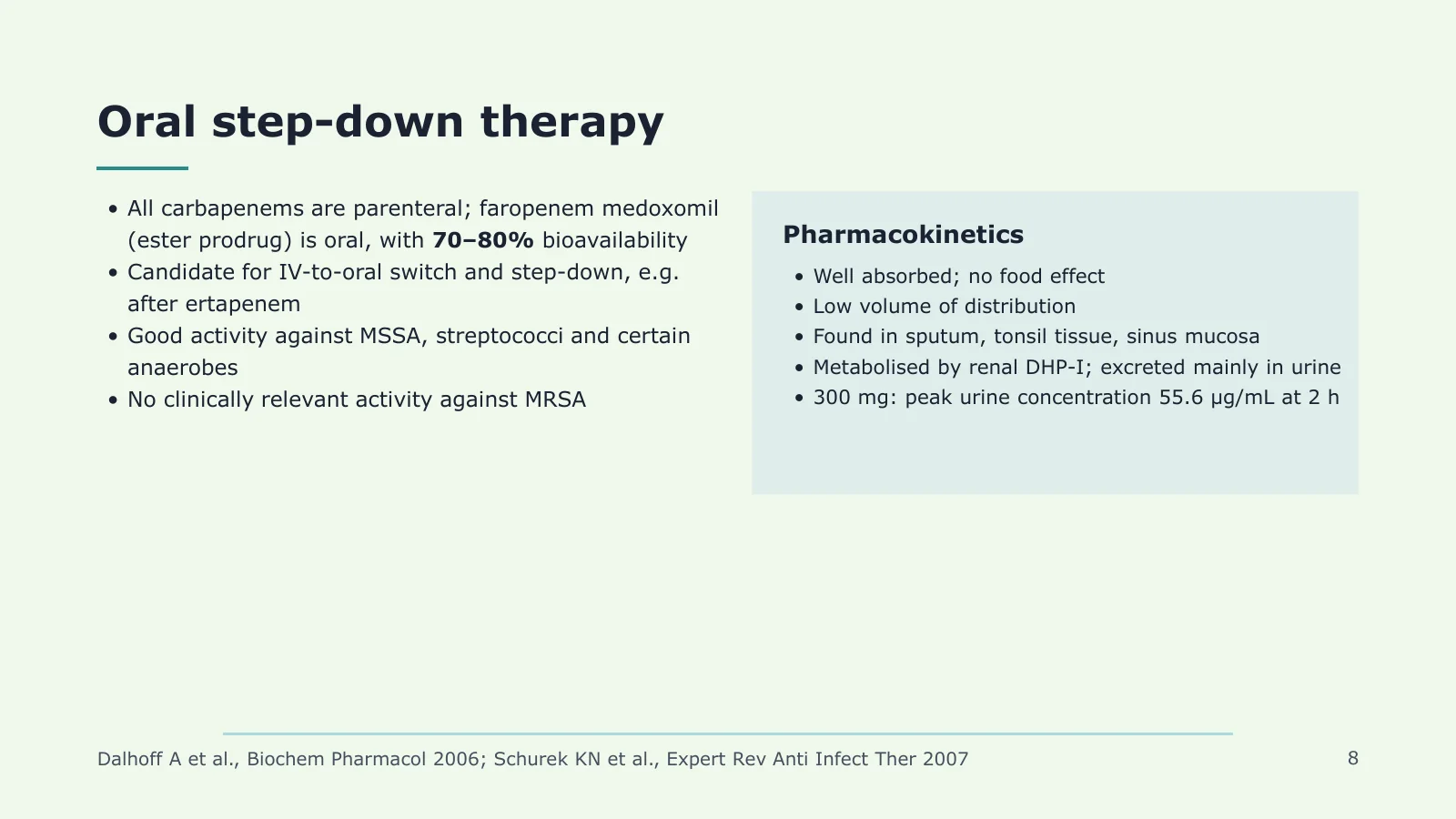
Oral step-down therapy
All carbapenems are parenteral; faropenem medoxomil (ester prodrug) is oral, with 70–80% bioavailability Candidate for IV-to-oral switch and step-down, e.g. after ertapenem Good activity against MSSA, streptococci and certain anaerobes No clinically relevant activity against MRSA
Pharmacokinetics
Well absorbed; no food effect Low volume of distribution Found in sputum, tonsil tissue, sinus mucosa Metabolised by renal DHP-I; excreted mainly in urine 300 mg: peak urine concentration 55.6 µg/mL at 2 h
Dalhoff A et al., Biochem Pharmacol 2006; Schurek KN et al., Expert Rev Anti Infect Ther 2007
8
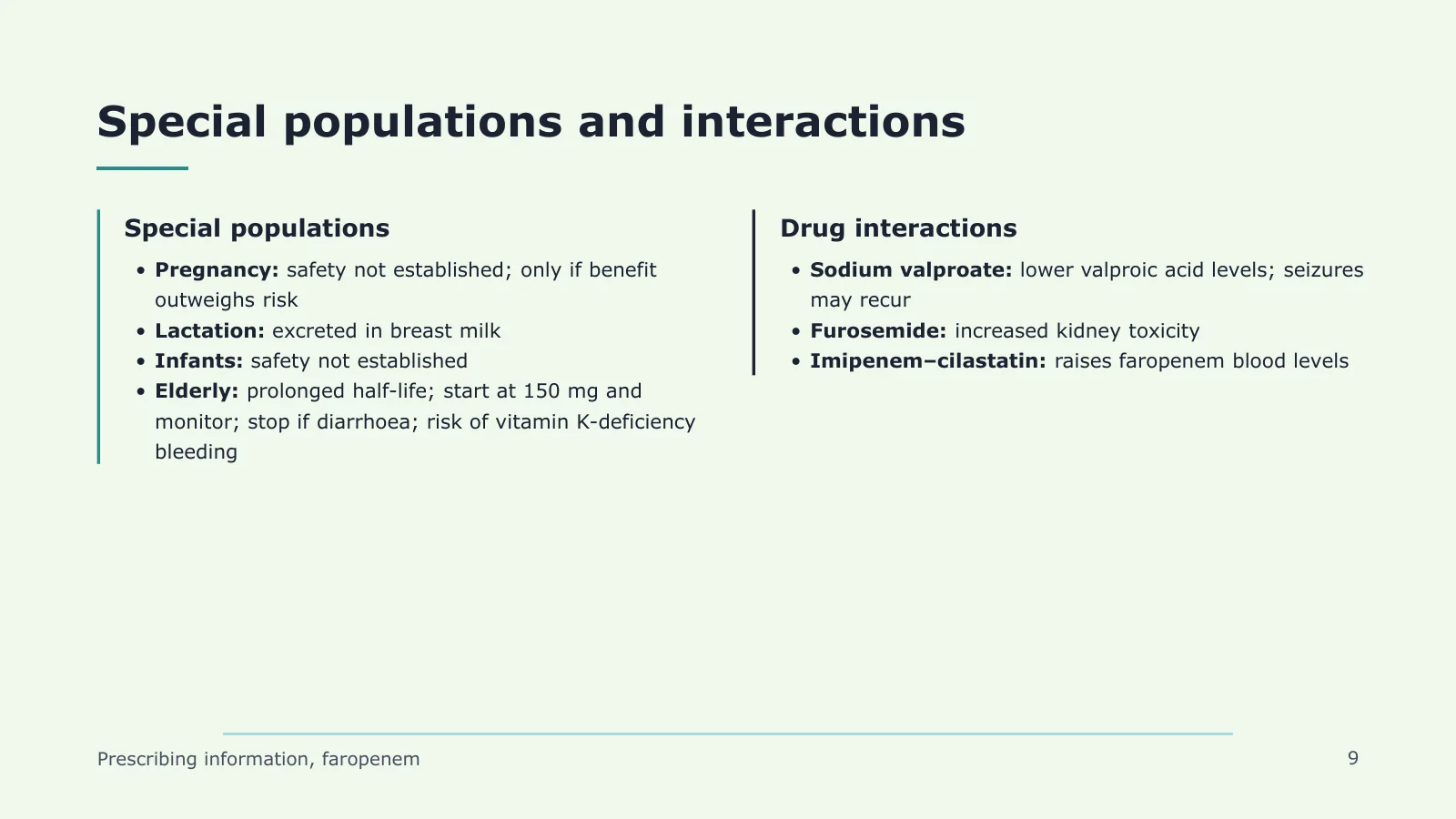
Special populations and interactions
Special populations
Pregnancy: safety not established; only if benefit outweighs risk Lactation: excreted in breast milk Infants: safety not established Elderly: prolonged half-life; start at 150 mg and monitor; stop if diarrhoea; risk of vitamin K-deficiency bleeding
Drug interactions
Sodium valproate: lower valproic acid levels; seizures may recur Furosemide: increased kidney toxicity Imipenem–cilastatin: raises faropenem blood levels
Prescribing information, faropenem
9
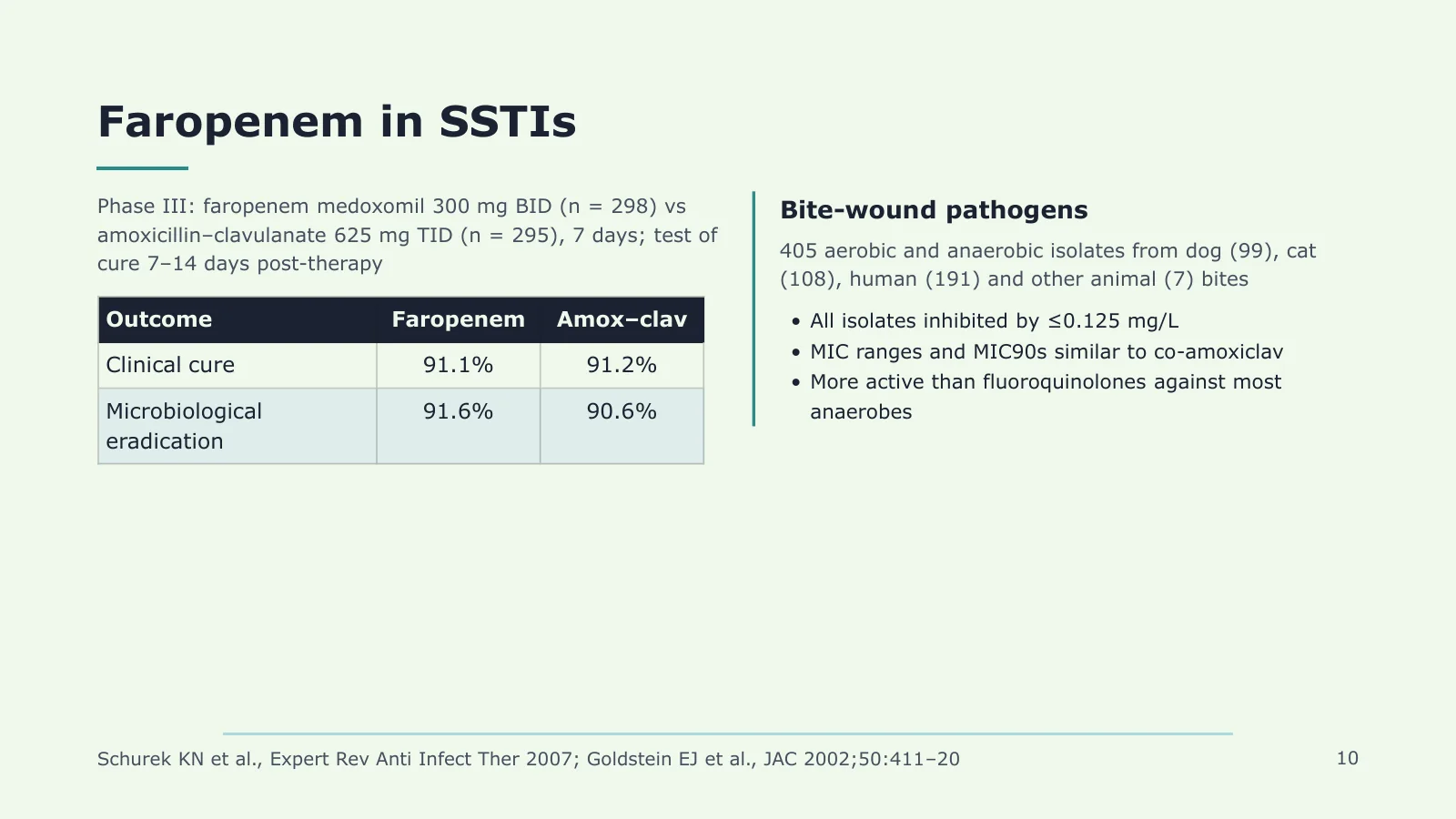
Faropenem in SSTIs
Phase III: faropenem medoxomil 300 mg BID (n = 298) vs amoxicillin–clavulanate 625 mg TID (n = 295), 7 days; test of cure 7–14 days post-therapy
Bite-wound pathogens
405 aerobic and anaerobic isolates from dog (99), cat (108), human (191) and other animal (7) bites
All isolates inhibited by ≤0.125 mg/L MIC ranges and MIC90s similar to co-amoxiclav More active than fluoroquinolones against most anaerobes
Schurek KN et al., Expert Rev Anti Infect Ther 2007; Goldstein EJ et al., JAC 2002;50:411–20
10
| Outcome | Faropenem | Amox–clav |
| Clinical cure | 91.1% | 91.2% |
| Microbiological eradication | 91.6% | 90.6% |

Thank you
Dr Prateek Gupta · prateekguptasurgery.com
Sources and image credits
Sources are cited at the foot of each slide, as listed below.
Sources
- [1] Shaikh S et al. 2015; Dalhoff A et al. 2006; WHO fact sheet: Antibiotic resistance
- [2] Prescribing information, faropenem (Feb 2009)
- [3] Woodcock JM et al., J Antimicrob Chemother 1997;39:35–43
- [4] Schurek KN et al., Expert Rev Anti Infect Ther 2007;5(2):185–98
- [5] Woodcock JM et al., JAC 1997
- [6] Schmitz FJ et al., JAC 2001;48:141–56
- [7] Feng XW et al., Infect Microbes Dis 2020
- [8] Boswell FJ et al., JAC 2002;50:525–32
- [9] Gettig JP et al., Ann Pharmacother 2008;42:80–90
- [10] Sato K et al., JAC 1999;44:337–41
- [11] Dalhoff A et al., Biochem Pharmacol 2006; Schurek KN et al., Expert Rev Anti Infect Ther 2007
- [12] Prescribing information, faropenem
- [13] Schurek KN et al., Expert Rev Anti Infect Ther 2007; Goldstein EJ et al., JAC 2002;50:411–20