Skip to content

Sidequests · 4 apps

Reading and writing

Where reading is kept and writing gets done.

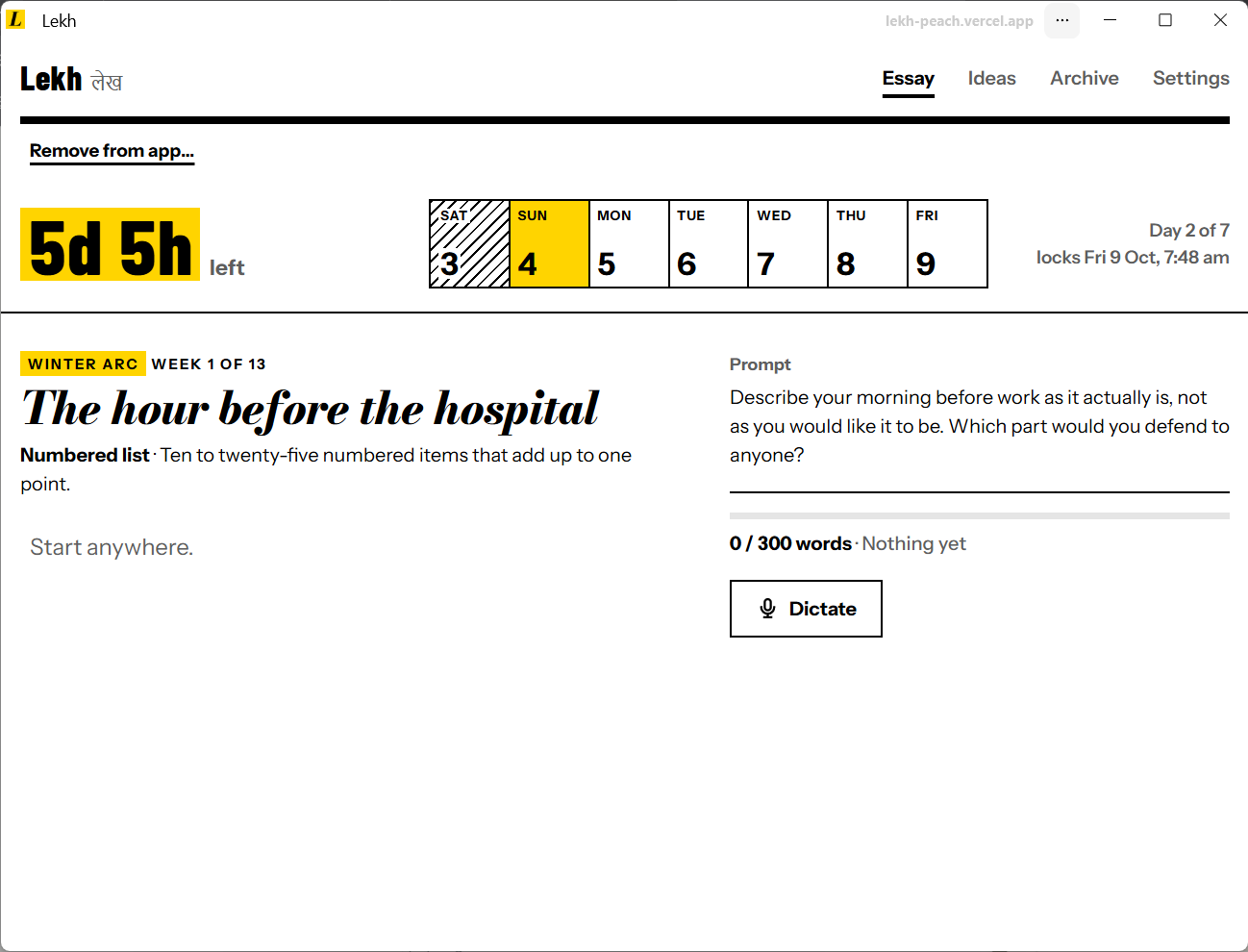
Screenshots show the apps running on demonstration data only — invented cases, invented figures, invented notes, and example reading material in Kosh — except Lekh’s, which shows the real week that produced “The hour before the hospital”, before a word was written. No clinical, financial, or personal records appear in any screenshot.

Lekh desktop in the yellow Front page theme, showing the seven-day essay timer, calendar and an empty writing area
Active

Lekh

लेख — ‘a piece of writing’

Read every day. Write every week.

My writing desk, on the web and on Android. It opens on reading: a shelf of unread stories, poems and essays, in English, Hindi and Punjabi, and any passage can be discussed with one AI model or a small council of them. Then the writing: one essay a week, and stories at my own pace.

The weekly essay keeps the original rule. I draw a topic or bring my own, then have seven days; under 300 words at the deadline, the week is marked missed. Stories have no clock and no word floor.

A finished essay gets an editorial review — ready, revise or develop — with questions rather than rewrites. A copy edit happens only when I ask, and I keep or refuse it change by change. Lekh publishes straight to Written Works, but only the exact text I approve; no agent can approve for me.

Read the first essay it published
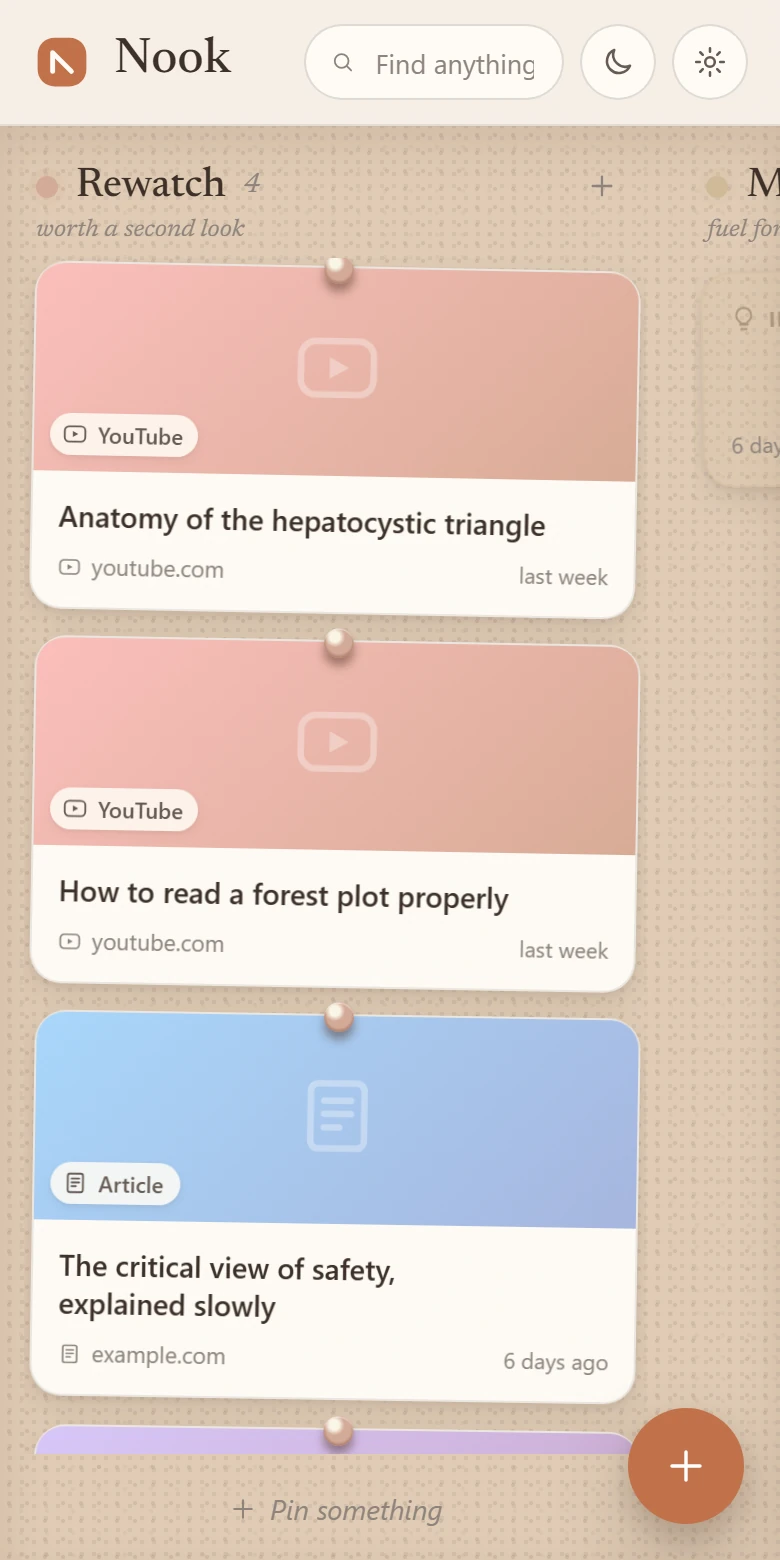
Nook pinboard showing demonstration saves
Active

Nook

A cosy shelf for the internet.

Links, papers, and ideas get parked on a warm pinboard instead of dying across four hundred open tabs. Old saves resurface on their own, so nothing rots unseen.

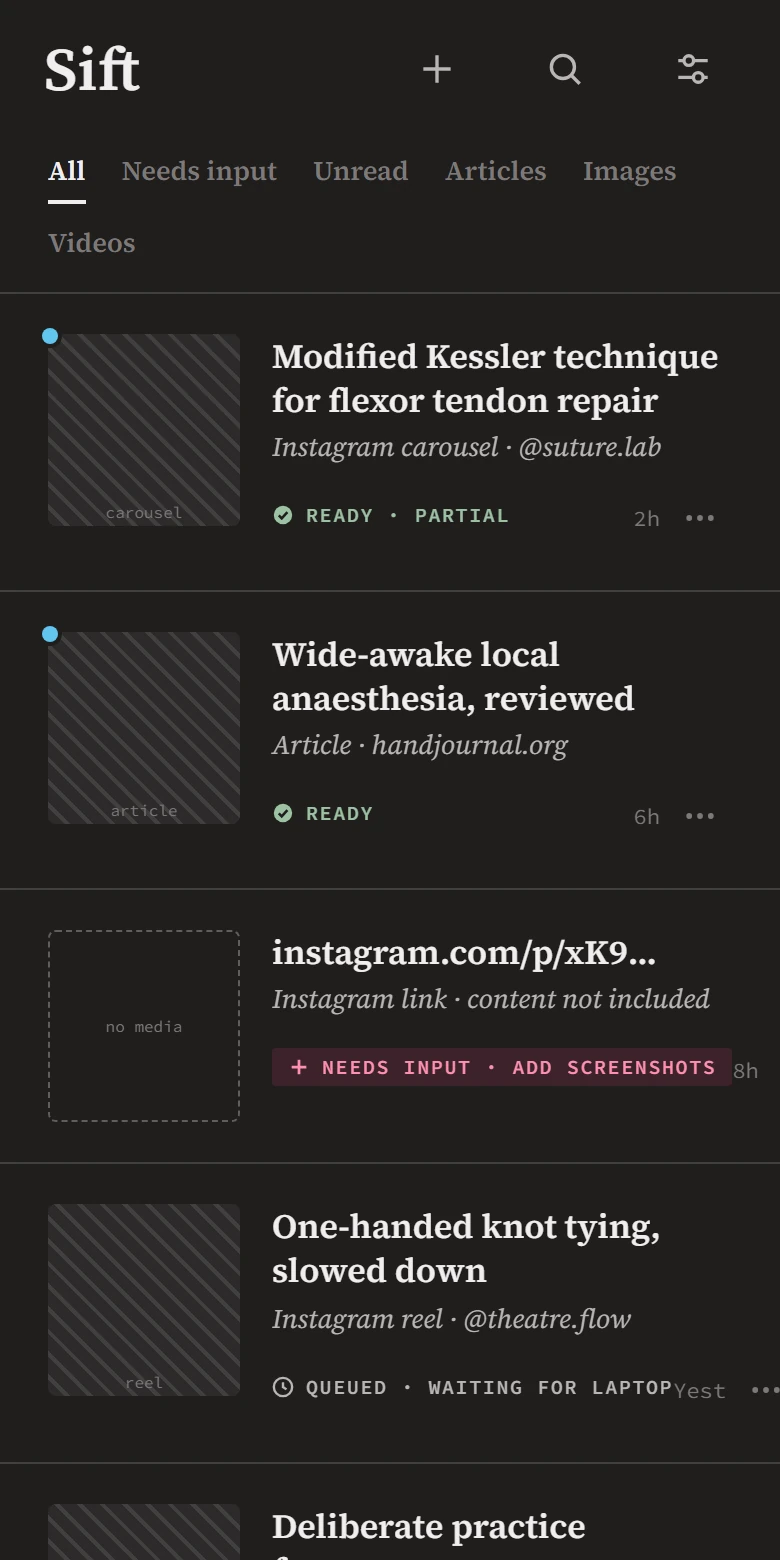
Sift inbox showing demonstration captures
Active

Sift

Find what is worth keeping.

Saved carousels and screenshots become searchable text through local AI models on my laptop. Captures pass through my private storage, and originals remain available for checking the extraction. Incomplete and failed captures carry status messages; the text still needs a reader’s judgement.

Built because bookmarks are where good finds go to die.

How its models were chosen
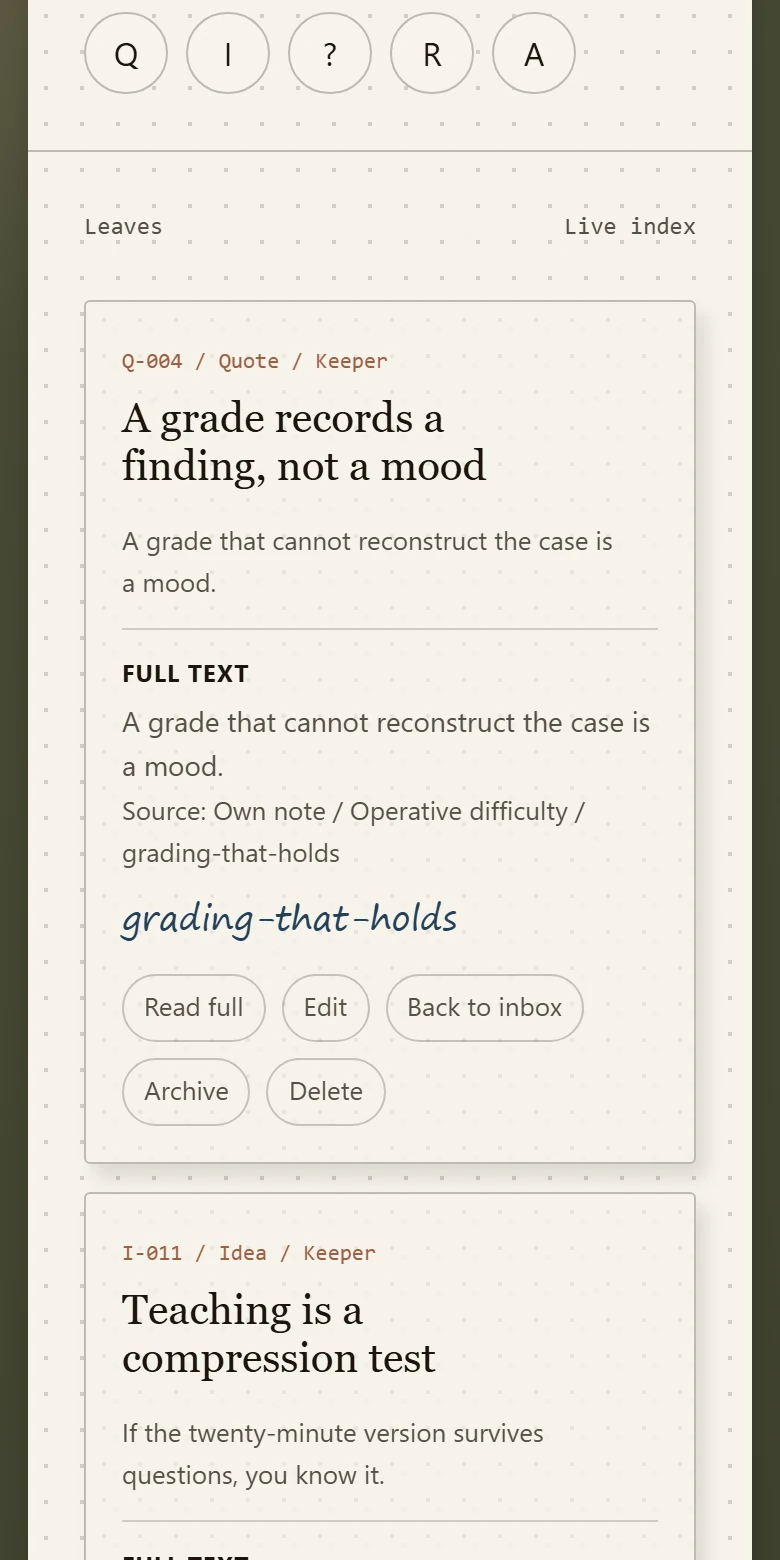
Commonplace Fieldbook index showing demonstration leaves
Retired

Commonplace Fieldbook

A commonplace book, the old way, on new paper.

Reading notes captured as leaves and threaded by theme — the Renaissance commonplace tradition rebuilt as a book-styled notebook, paper grain included.

A sketched Prateek hammering at a workbench; he pauses and waves when you scroll up